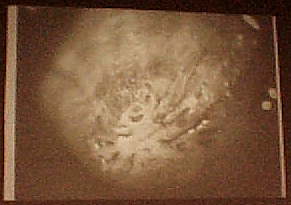
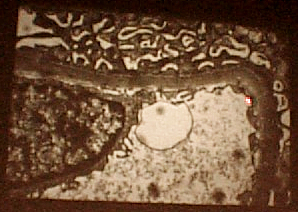
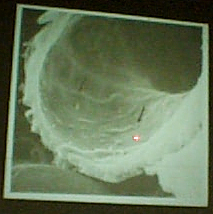
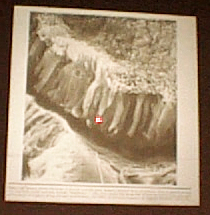
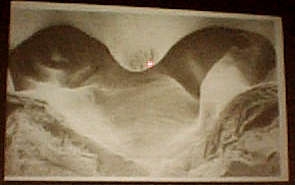
SEM of a Renal Pyrimid - Infections of the kidney can lead to scar formation in the pole area

Urinary System
|
SEM of a Renal Pyrimid - Infections of the kidney can lead to scar formation in the pole area |
|
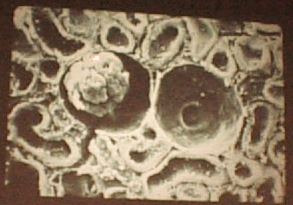
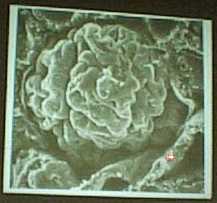
SEM Glomerulus - E= Efferencts; A=Afferents |
|
Glomerulus hanging in space = Under a lot of pressure |
|
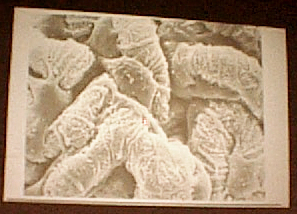
Capillary loops |
|
Higher EM of Capillary loops, See foot process |
|
Fenestrated capillary walls with filtration system |
|
See fenestrations and holes |
|
See large primary cell bodies |
|
High SEM => See primary and secondary processes of Podocytes |
|
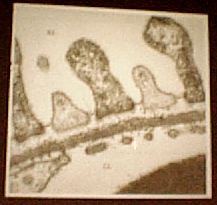
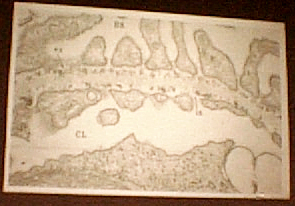
Layers of the kidney basement membrane, Fenestrated capillaries, Slit pore is extremely small |
|
Slit diaphragms |
|
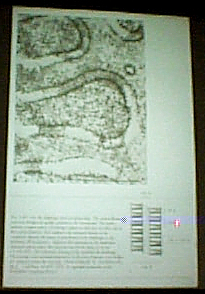
Shows the charge of the filtrations layer - Dots = + charged dextran molecules. They stay in the negative charged structure. |
|
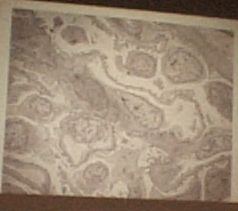
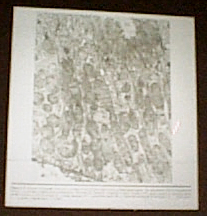
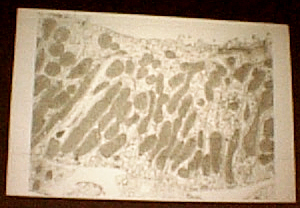
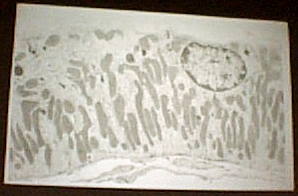
Proximal convoluted tubules |
|
Proximal convoluted tubules |
|
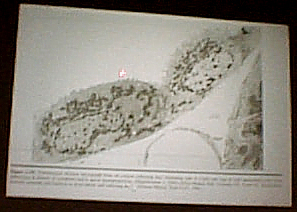
Thin loops of Henle |
|
Thick Ascending loop cells = no brush borders |
|
Distal convoluted tubules = only present in the cortex; Similar to the thick ascending but there is a decrease in the number of mitochondria and a decrease in the size |
|
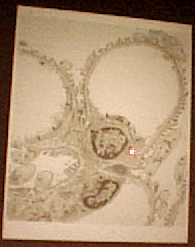
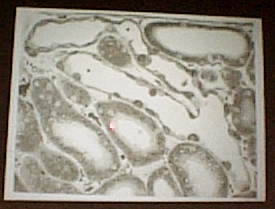
Proximal tubule with collecting duct in the cortex |
|
Dark cells ? |
|
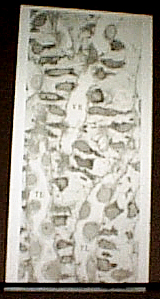
Medulla intersticium - See the cells that connect thin loop of henle |
|
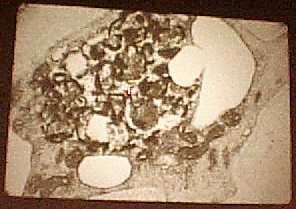
Renin specific granules of the JGA |
|
SEM of renal papilla = area crivosa, (This was labelled strangely in my computer, it is still the renal lecture) |